
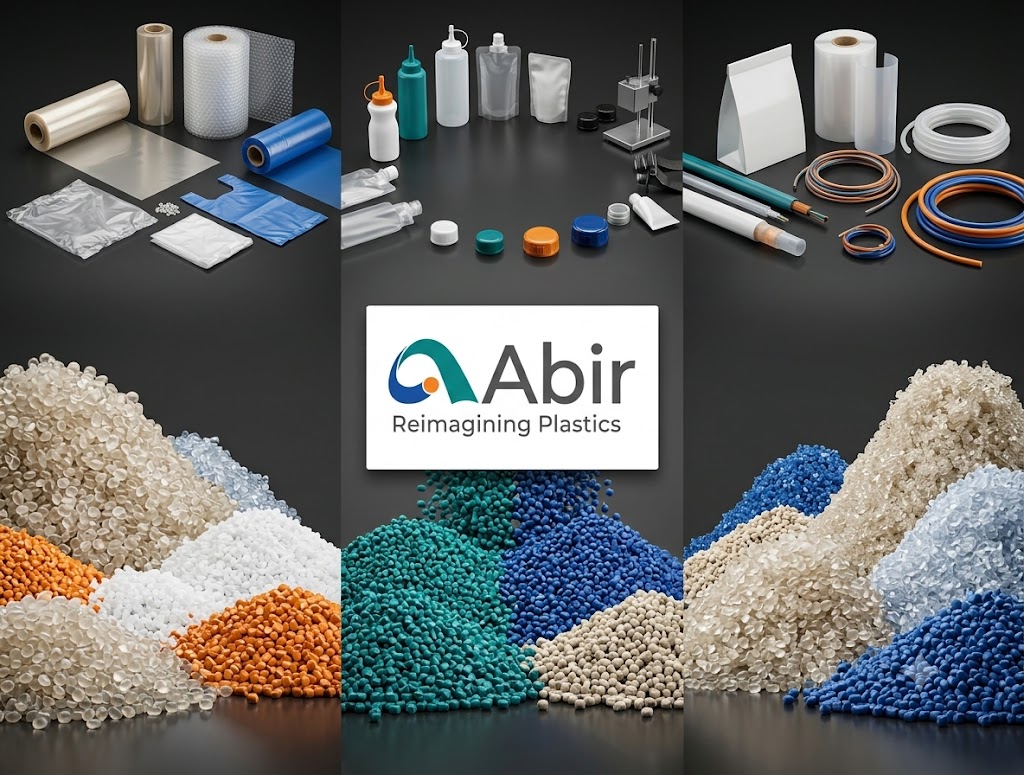
Why LDPE Grades Have Different Properties
LDPE grades differ in molecular structure, molecular weight distribution, additives and melt flow characteristics. These differences influence how the resin behaves during processing and how the finished product performs.
Film grades need suitable melt strength, bubble stability and film toughness. Blow-moulding grades require appropriate melt strength and wall-thickness control. Moulding grades must provide suitable flow characteristics and meet the required mechanical specifications.
Additives can also influence properties such as UV resistance, slip, anti-blocking and processing behaviour. Therefore, selecting a grade requires more than comparing its density or melt flow rate.
How to Select an LDPE Grade
| Application requirement | Recommended selection approach | Key properties to check |
|---|---|---|
| Flexible packaging films | Select an LDPE grade designed for film extrusion | Melt strength, flexibility, tear resistance |
| Agricultural films | Choose a grade suitable for the intended film thickness and service conditions | Film toughness, UV requirements, processing stability |
| Squeeze bottles | Consider grades intended for blow moulding | Flexibility, melt strength, wall thickness |
| Tubing and flexible profiles | Select a grade compatible with the extrusion process | Melt flow rate, flexibility, dimensional stability |
| Injection-moulded components | Choose a grade specifically recommended for injection moulding | Flow behaviour, mould filling, dimensional accuracy |
| Special-purpose applications | Match the grade to the operating environment and applicable standards | Temperature resistance, chemical exposure, compliance |
How LDPE Properties Affect Processing
LDPE has a branched molecular structure that contributes to its flexibility and melt-processing characteristics. These properties make it useful for manufacturing thin films and flexible products.
For blown-film extrusion, suitable melt strength helps maintain a stable film bubble. Cast-film extrusion produces flat films using a flat die and cooling roll. Blow moulding forms hollow products, while sheet and tubing extrusion produce continuous products with defined dimensions. Injection moulding produces individual components using a mould.
The selected LDPE grade must provide suitable flow, melt strength and cooling behaviour for the intended process.
Steps to Select the Right LDPE Grade
1. Define the application
Identify the intended product, such as packaging film, an agricultural cover, a squeeze bottle, tubing or a moulded component.
2. Identify the processing method
Determine whether the product will be manufactured using blown-film extrusion, cast-film extrusion, blow moulding, tubing extrusion or injection moulding.
3. Review melt flow rate
Compare the grade's melt flow rate under the specified test conditions with the processing requirements. Avoid selecting a grade based on this value alone.
4. Evaluate mechanical properties
Check flexibility, tensile strength, elongation, tear resistance, puncture resistance and other properties relevant to the product.
5. Assess operating conditions
Consider service temperature, chemical contact, UV exposure, moisture and expected service life.
6. Check additives and compliance
Verify whether the application requires UV stabilisers, slip agents, anti-blocking additives or specific regulatory approvals.
7. Confirm supplier recommendations
Review the technical data sheet and processing guide. Where necessary, conduct production trials and test finished products before approving the grade.
LDPE Grade Selection FAQs
Q1. What is the most important factor when selecting an LDPE grade?
The intended application and processing method are the starting points. Melt flow rate, mechanical properties and service conditions must then be evaluated.
Q2. Does melt flow rate determine LDPE grade suitability?
No. Melt flow rate indicates flow behaviour under specified test conditions, but melt strength, mechanical properties and processing requirements are also important.
Q3. Which LDPE grade is suitable for film extrusion?
Choose a grade specifically recommended for the intended film process, with suitable melt strength, film-forming behaviour and mechanical performance.
Q4. Can the same LDPE grade be used for every application?
Not necessarily. Different applications and manufacturing processes may require different melt flow characteristics, additives and mechanical properties.
Q5. What technical documents should be checked before selecting a grade?
Review the technical data sheet, processing recommendations and relevant regulatory documentation. Request additional testing information where the application requires it.
Material Selection Support
Need Help Selecting the Right LDPE Grade?
Share your product application, manufacturing process and performance requirements with our team. We can help you identify the technical specifications to evaluate when selecting a suitable LDPE grade.