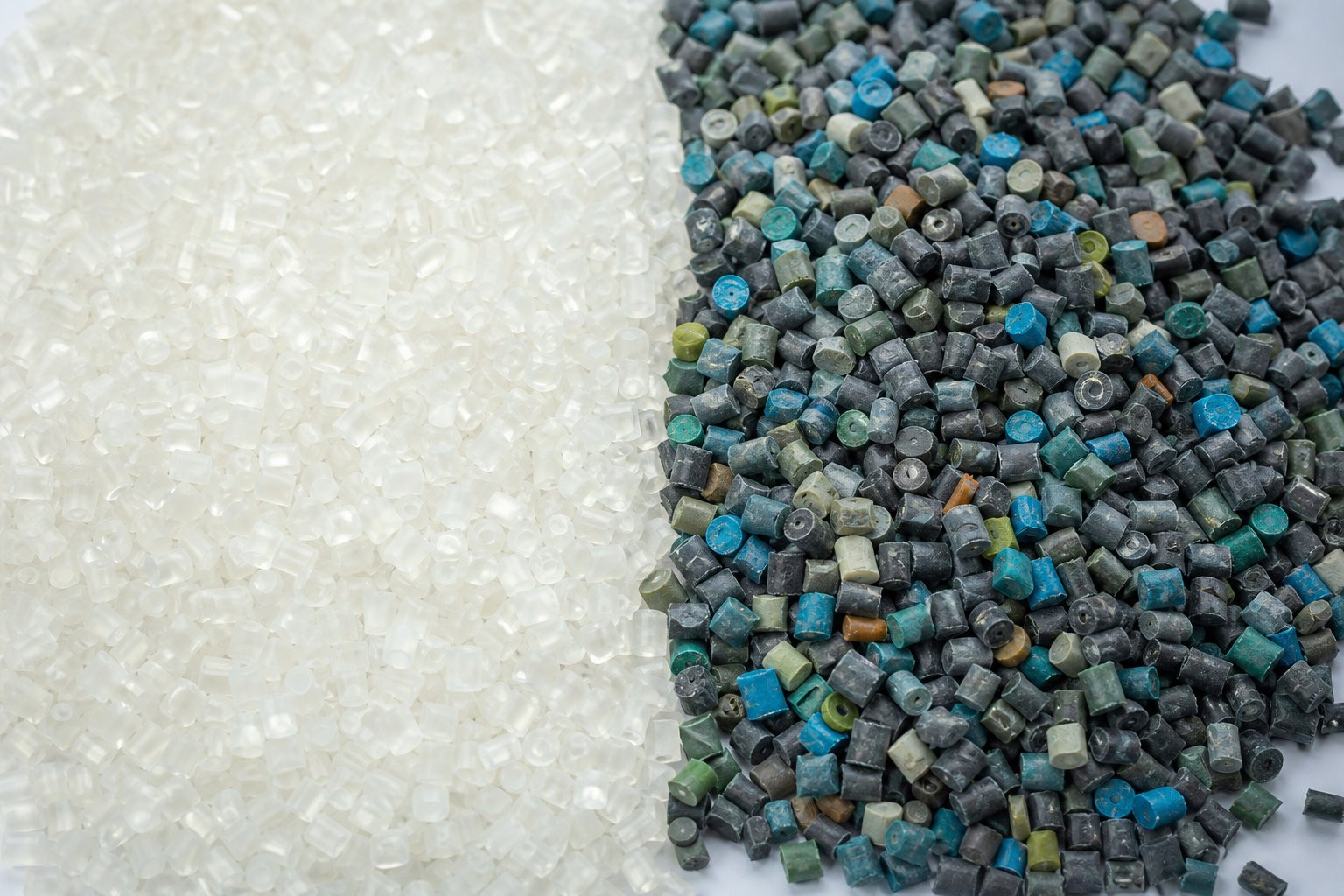
Source & recovery history
Ask whether the feedstock is post-industrial or post-consumer, how it is segregated, and what sorting, washing or filtration has taken place. Use source claims only when supported.

Recovered HDPE reprocessed for further use. Source, segregation and lot consistency matter as much as the polymer name.
Review source segregation, polymer contamination, colour and batch variation. Stress-crack and impact requirements must be validated for the intended part.
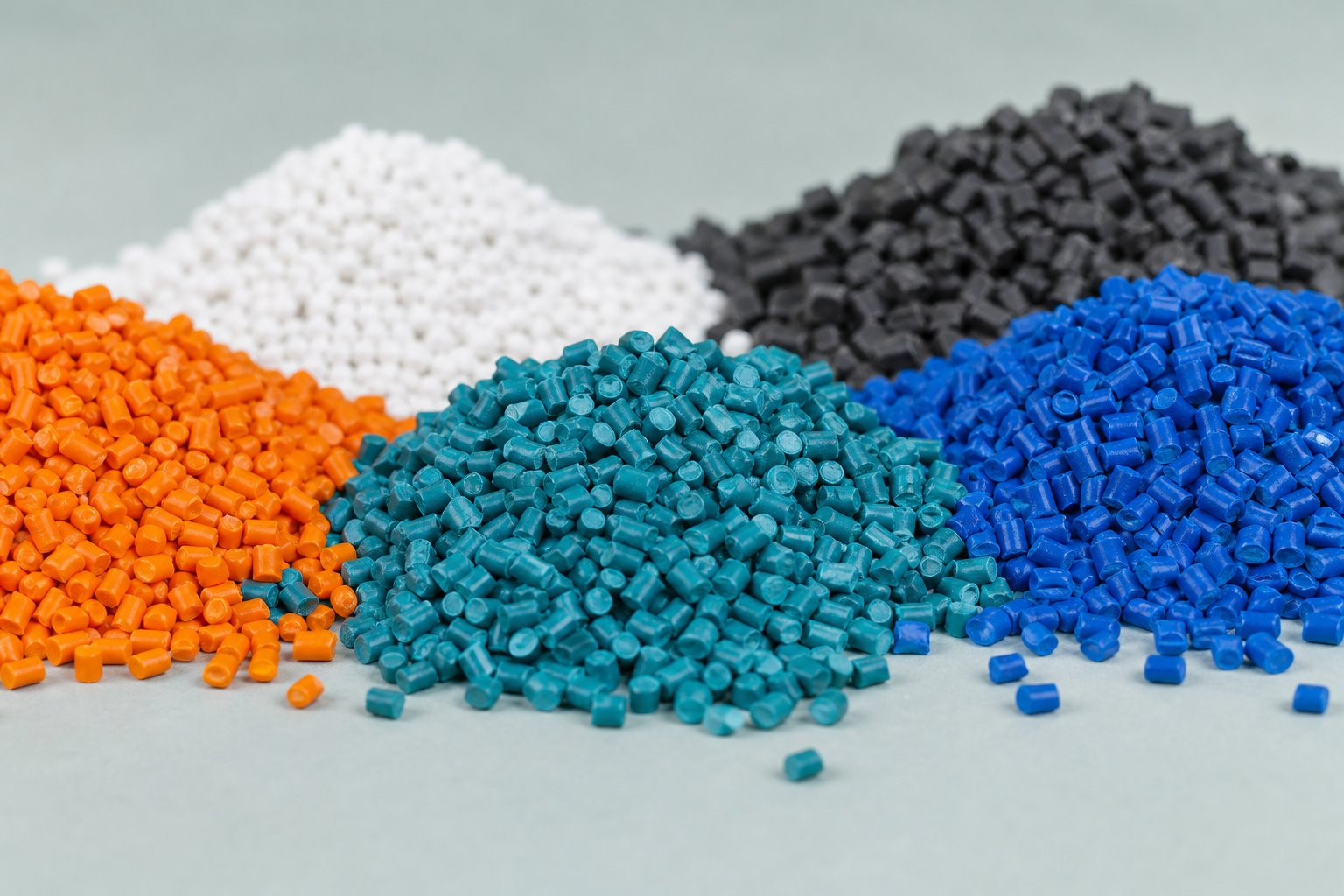
HDPE is a rigid polyethylene used in containers, moulded components, profiles and grade-specific pipe applications.
Recovered HDPE reprocessed for further use. Source, segregation and lot consistency matter as much as the polymer name. The supply classification and polymer formulation are different decisions: review both before placing an order.
Use these checks to make the enquiry specific to your process. General material guidance is not guaranteed batch data.
Ask whether the feedstock is post-industrial or post-consumer, how it is segregated, and what sorting, washing or filtration has taken place. Use source claims only when supported.
Review source segregation, polymer contamination, colour and batch variation. Stress-crack and impact requirements must be validated for the intended part.
Review representative samples, test frequency and allowed variation. Odour, colour, contamination and property drift should be addressed in the acceptance brief, not left until production.
The HDPE family is evaluated for containers, moulded components and extrusion products. Those examples do not establish that every recycled lot is suitable for those uses.
Review source segregation, polymer contamination, colour and batch variation. Stress-crack and impact requirements must be validated for the intended part.
For food-contact, medical, electrical, pressure-rated or other regulated uses, request evidence for the exact grade, source and intended application. Confirm processing conditions and finished-product performance before approval.
Provide the available technical and commercial details so the product team can review your requirement efficiently. Share the application, processing method, grade or specification, required form, quantity, pack size, destination, and required documents.
Not automatically. Compare the actual batch specification, processing behaviour and finished-product performance. Validate the change through an appropriate sample or production trial.
Include melt flow and test conditions, density, impact strength and environmental stress-crack resistance where relevant. Review source segregation, polymer contamination, colour and batch variation. Stress-crack and impact requirements must be validated for the intended part. Also include quantity, delivery location and the intended process.
Use the supply navigation above or the related pages below to compare prime, off-grade, recycled and scrap / regrind HDPE. Each page describes a different supply route; exact availability and suitability still need confirmation.
Choose a supply type to read its own material guide, selection checks and enquiry details. These links open separate pages.
Fresh HDPE resin selected by manufacturer grade, datasheet and documented properties. Prime is not the same as near-virgin or recycled material.
Explore prime / virgin HDPEHDPE supplied outside its original prime specification or as a declared off-grade lot. Review the actual deviation and batch results before deciding suitability.
Explore off-grade HDPESorted HDPE scrap or mechanically reduced regrind for an agreed recovery or conversion process. Feedstock is not automatically equivalent to ready-to-use resin.
Explore scrap / regrind HDPE