
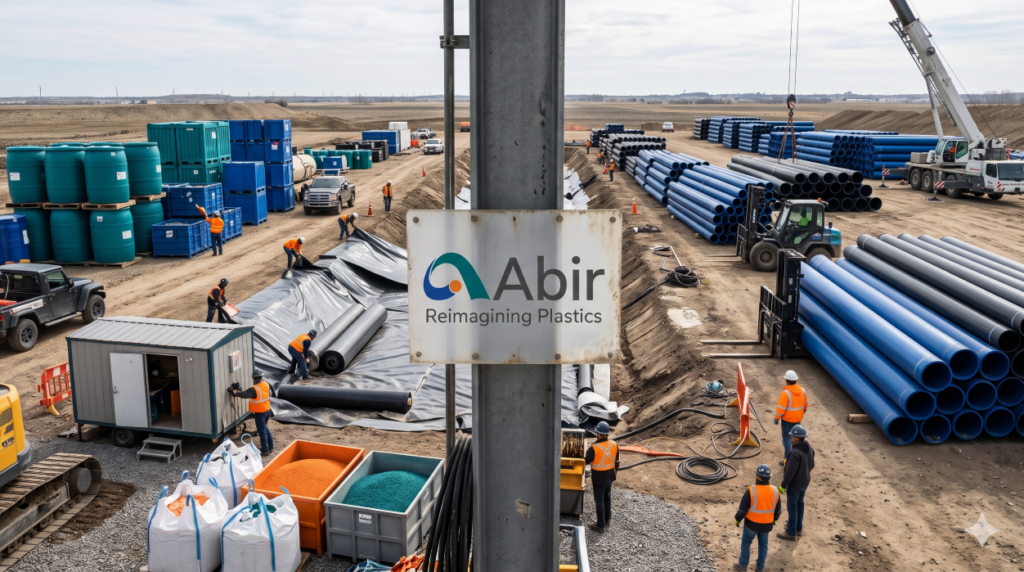
Choosing Polymers for the Finished Product
The right polymer depends on what the finished product must do, how it will be manufactured and the conditions it will face during use. Buyers should consider factors such as strength, stiffness, impact resistance, flexibility, temperature, chemical exposure, weight, appearance and expected service life before comparing material grades.
Common polymer families—including HDPE, LDPE, LLDPE, PP, PVC, PET, ABS and engineering plastics—serve different purposes. However, no single polymer is automatically the best choice for every product within an application category. The specific grade, formulation, processing method and required standards all matter.
Common Applications and Materials to Evaluate
| Application | Materials to evaluate | Key consideration |
|---|---|---|
| Packaging films and flexible bags | Flexible packaging, liners, bags and protective film | Flexibility, tensile strength, puncture resistance, sealing behaviour and film-process requirements |
| Bottles and hollow containers | Containers for consumer, household or industrial uses | Contents compatibility, impact resistance, wall distribution, stiffness and the intended moulding process |
| Water and utility pipes | Pipe and conduit systems designed for specific service conditions | Applicable standards, pressure or load requirements, long-term performance and grade certification |
| Injection-moulded components | Housings, caps, fittings, brackets and general components | Flow behaviour, mould design, dimensional stability, strength and surface finish |
| Consumer products | Household items, storage products and everyday plastic goods | Durability, appearance, weight, cleaning conditions and expected service life |
| Industrial parts | Machine components, protective covers and equipment-related products | Mechanical loading, chemical exposure, temperature and dimensional requirements |
| Construction and infrastructure products | Profiles, conduits, selected fittings and building-related products | Weathering, impact, installation conditions, applicable standards and expected service life |
| Agricultural products | Selected films, irrigation components, containers and protective products | Sunlight exposure, moisture, chemicals, mechanical stress and outdoor durability |
| Electrical and electronic housings | Enclosures, covers and selected electrical components | Heat resistance, dimensional stability, impact performance and required electrical or flame-retardancy ratings |
| Recycled-content products | Applications where recycled material is technically suitable and permitted | Material consistency, contamination control, mechanical performance, traceability and application-specific restrictions |
Why the End Use Should Guide Material Selection
A polymer should be evaluated against the demands of the finished product rather than selected by name alone. Two products that look similar may need different materials because they face different loads, temperatures, chemicals or environmental conditions.
• Mechanical performance :
Start by identifying whether the product needs stiffness, flexibility, impact resistance, tensile strength or resistance to repeated loading. A rigid housing and a flexible liner have very different performance requirements, even if both are made from plastic. Consider how the product will be handled, installed, transported and used over time.
• Temperature and environmental exposure :
The operating environment can influence material choice. Heat, cold, sunlight, moisture and outdoor exposure may affect polymer performance. For outdoor products, evaluate weathering and UV stabilisation where relevant. For products exposed to chemicals, verify compatibility with the specific chemical, its concentration, the temperature and the duration of contact.
• Processing and product design :
The material must also suit the manufacturing process. Injection moulding, blow moulding, film extrusion and pipe extrusion each have different processing requirements. Melt flow, melt strength, shrinkage, cooling behaviour and dimensional stability may all influence the outcome. The product's shape, wall thickness and required tolerances should be considered alongside the process.
For more detail, see the HDPE Processing Methods guide and the Processing Guides.
• Appearance and finish :
Colour, gloss, transparency, texture and surface quality may be important for visible consumer products or packaging. The selected grade and any colour masterbatch or additives must be compatible with the processing method and the finished product's requirements. Where appearance is critical, assess samples produced under representative processing conditions.
• Regulatory and application requirements :
Some applications require specific standards, testing or documentation. Food-contact packaging, potable-water systems, electrical components and products used in safety-critical environments may have requirements beyond basic mechanical performance. Do not assume that a polymer family or recycled-content label alone establishes compliance.
• Virgin and recycled material :
Virgin and recycled grades can differ in consistency, colour, odour, contamination risk and mechanical properties. Recycled material may be suitable for some products when its specifications and quality controls meet the intended requirements. For regulated or demanding applications, verify the applicable restrictions and documented grade suitability before making a selection.
For related information, read Virgin vs Recycled HDPE and PCR vs PIR Recycled Plastic.
How to Evaluate Materials for a Specific Application
HDPE
When evaluating products that may need a balance of toughness, chemical resistance and stiffness, such as selected containers, utility products and pipes. Confirm the grade's suitability for the specific process and service conditions.
LDPE and LLDPE
When flexibility, film performance, sealing behaviour or impact resistance is important, particularly in selected packaging and liner applications. Compare grades against the required film properties and production method.
Polypropylene (PP)
When evaluating rigid moulded parts, selected packaging and other products where stiffness, weight, chemical resistance or temperature performance may be relevant. Check impact requirements and the intended operating temperature.
Polyvinyl chloride (PVC)
When a product requires rigid or flexible PVC formulations, such as selected profiles, pipes, cable-related products or flexible components. Confirm the formulation, additives, processing requirements and applicable standards.
PET
When evaluating selected packaging, bottles, films or other products that may require strength, clarity or barrier performance. Confirm the grade, processing route and any food-contact or other compliance requirements.
ABS and engineering plastics
When the product may need a particular combination of impact resistance, surface finish, dimensional stability or heat performance. Compare exact grades against the operating environment, loading and manufacturing process.
Frequently asked questions
How do I choose a plastic material for a finished product?
Begin with the product's function, operating environment, expected life and manufacturing process. Identify the required mechanical, thermal, chemical and appearance properties, then compare grades using technical data and relevant standards.
Which polymer is best for packaging?
There is no single best polymer for all packaging. Flexible films may use selected LDPE or LLDPE grades, while rigid containers may use HDPE, PP, PET or other materials depending on the product. Contents compatibility, sealing, barrier performance, processing and regulatory requirements all influence the choice.
Which materials should I evaluate for pipes?
HDPE and PVC are used in different types of pipe applications, while other materials may be suitable for particular systems. Selection depends on the service, pressure or load conditions, installation method, temperature, applicable standards and approved grade specifications.
Is PP or HDPE better for a rigid plastic product?
It depends on the design and requirements. PP and HDPE differ in stiffness, impact behaviour, temperature performance and processing characteristics. Compare the specific grades against the part's loads, geometry, operating environment and manufacturing process.
What properties matter most for industrial components?
The key properties depend on how the component will be used. Common considerations include mechanical strength, impact resistance, wear, chemical compatibility, temperature performance, dimensional stability and expected service life.
Can the same material be used for different applications?
Sometimes. A polymer family may be used across several industries, but different applications can require different grades or formulations. A material suitable for one product should not be assumed suitable for another without checking the requirements.
How important is the processing method when choosing a material?
It is essential. A grade must be suitable for the intended conversion process as well as the finished product. Flow behaviour, melt strength, shrinkage, cooling and process stability can influence production quality and final performance.
Can recycled plastic be used in finished products?
Yes, for applications where the recycled material meets the required performance, quality and regulatory conditions. Evaluate consistency, contamination controls, traceability and grade specifications. Some applications have restrictions that must be checked before recycled content is used.
Do I need technical data before requesting a material quote?
Technical data is helpful but not always necessary for an initial enquiry. If you have a grade name or data sheet, provide it. Otherwise, share the product description, manufacturing process, required properties, quantity and any applicable standards so the options can be evaluated more accurately.
What information should I include in a material enquiry?
Include the intended application, product or part description, processing method, target properties, colour, virgin or recycled requirements, estimated quantity, destination and any technical or regulatory specifications. Drawings, photographs or an existing grade reference can also help clarify the requirement.
Application-Based Material Selection
Tell Us About Your Finished Product
Share your application, manufacturing process and key performance requirements with our team. These details can help narrow the material options and identify the technical specifications that need to be confirmed before selecting a grade.