How Is EVA Processed?
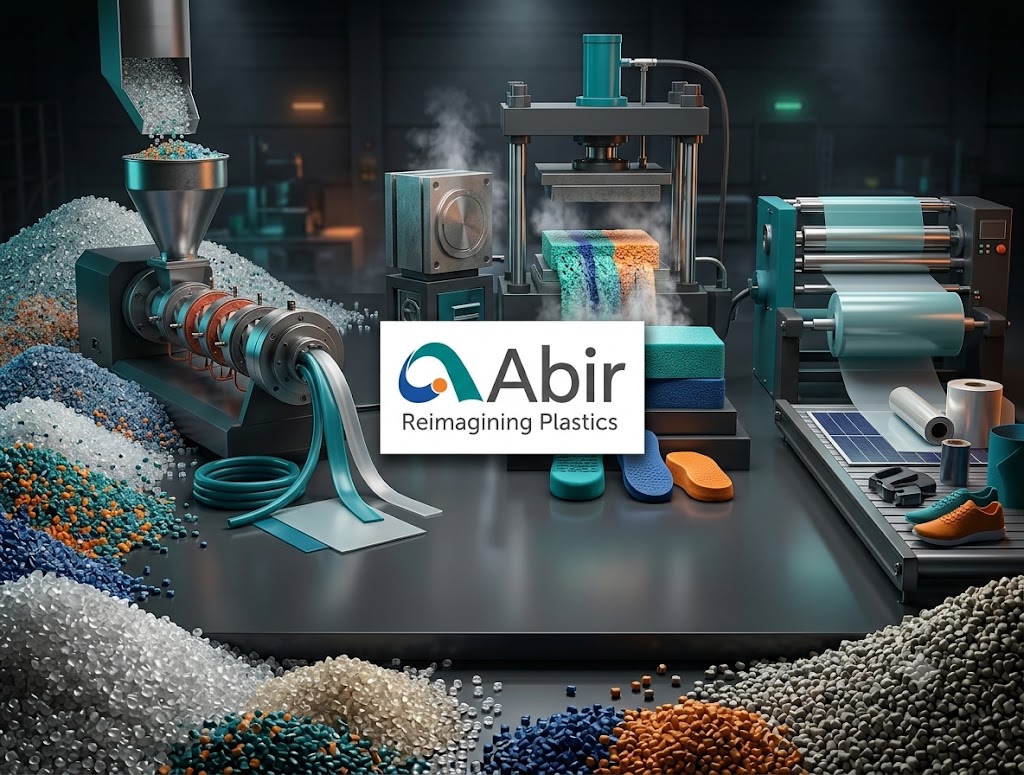
Ethylene Vinyl Acetate (EVA) can be processed through several conversion methods depending on the grade, formulation and finished-product requirements. Common routes include foam production, extrusion, injection moulding, film processing and compounding.
Each process places different demands on the material. Foam production may require suitable expansion and cell-structure control, while extrusion depends on stable melt flow and consistent output. Injection moulding requires appropriate filling and cooling behaviour, and film processing requires control over thickness, flexibility and surface quality.
Selecting an EVA grade therefore involves more than checking the polymer name. Vinyl acetate (VA) content, melt flow rate (MFR), density, mechanical properties and processing recommendations should all be evaluated against the intended manufacturing method.
Common EVA Processing Methods at a Glance
| Processing method | Typical fit | Key consideration |
|---|---|---|
| EVA foam production | Footwear components, cushioning, protective products and selected sports products | Foaming compatibility, expansion behaviour, cell structure, density and compression properties |
| Injection moulding | Moulded components, selected footwear parts and technical products | Melt flow, mould filling, cooling, shrinkage and finished-part properties |
| Extrusion | Continuous profiles, sheets, tubing and selected flexible products | Melt stability, output consistency, die conditions and dimensional control |
| Film processing | Flexible films, sheets, liners and selected packaging applications | Flexibility, film strength, thickness control, surface quality and sealing requirements |
| Compounding | EVA blends, modified formulations, colour compounds and application-specific materials | Compatibility, additive dispersion, formulation consistency and final property requirements |
| Hot-melt adhesive formulation | Selected adhesives used in packaging, assembly and bonding applications | Compatibility with other ingredients, adhesion performance, softening behaviour and application conditions |
| Compression moulding | Selected EVA foam and moulded products, depending on the formulation and production route | Mould temperature, pressure, heating and cooling cycles, expansion and dimensional consistency |
| Thermoforming | Selected sheet-based applications where the EVA formulation and sheet properties permit forming | Sheet thickness, heating range, forming behaviour and dimensional stability |
| Crosslinked EVA foam processing | Foam products requiring a controlled cellular structure and particular mechanical properties | Crosslinking system, expansion conditions, formulation and process control |
| Reprocessing and recycling | Selected manufacturing scrap and recovered EVA materials where technically suitable | Material history, contamination, degradation, consistency and end-use restrictions |
How EVA Properties Influence Processing
EVA processing behaviour depends on the polymer's composition, molecular characteristics, formulation and the conditions used during conversion. Two grades may belong to the same EVA family but behave differently on the production line.
• Vinyl acetate content :
Vinyl acetate (VA) content influences flexibility, softness, crystallinity and other physical properties. These differences can affect the way EVA behaves during processing and the characteristics of the finished product.
A grade with higher VA content may be considered when greater flexibility or softness is required, but this does not automatically make it suitable for every foam, extrusion or moulding application. The full technical specification must be reviewed.
• Melt flow rate :
Melt flow rate (MFR) helps describe how a polymer flows under specified temperature and load conditions. It can support comparisons between EVA grades intended for a particular process.
However, MFR is not a complete measure of processing performance. Equipment design, temperature, shear conditions, product geometry and other material characteristics also affect production. Compare MFR values only when the test conditions are equivalent.
• Foam production :
EVA foam production involves a formulation and process designed to create a cellular structure. Depending on the production route, foaming agents, crosslinking systems, heat and pressure may be involved. Expansion, cell structure, density, hardness and compression set are important considerations.
The selected EVA grade must be compatible with the complete foam formulation and processing conditions. A general-purpose EVA grade should not be assumed suitable for every foam process.
• Injection moulding :
During injection moulding, molten EVA is introduced into a mould and cooled to form a finished part. Material flow, mould filling, cooling behaviour, shrinkage and part design all influence the result.
The grade should be selected according to the machine, mould design, required cycle and final mechanical properties. Processing recommendations from the manufacturer should guide temperature and other operating conditions.
• Extrusion and film processing :
Extrusion converts molten EVA into a continuous product through a die. Film production requires additional attention to thickness, flexibility, strength and surface quality. Stable melt behaviour and suitable process conditions help maintain consistent output.
The correct grade depends on the type of extrusion line, product design and required film or sheet properties.
• Compounding and adhesive formulations :
EVA may be combined with other polymers, fillers, additives or formulation ingredients to achieve particular properties. In adhesive applications, EVA is used as a component in selected hot-melt formulations. Compatibility, ingredient dispersion, thermal behaviour and the performance of the complete formulation are important.
• Reprocessing considerations :
Recovered EVA and production scrap may be considered for selected reprocessing applications. However, previous heat exposure, contamination, crosslinking and material degradation can affect how the material behaves. Some crosslinked EVA foam, for example, cannot be processed in the same way as ordinary remeltable thermoplastics.
For further grade information, see the Understanding EVA Grades guide and the EVA Grade Guide.
How to Select EVA for a Processing Method
EVA for foam production
When manufacturing footwear components, cushioning or protective foam products. Review VA content, foaming compatibility, crosslinking requirements, density, cell structure and compression performance.
EVA injection moulding grades
When producing moulded components that require specific flexibility, impact behaviour or surface characteristics. Compare MFR, mould-filling behaviour, cooling requirements and finished-part properties.
EVA extrusion grades
When producing continuous sheets, profiles or other extruded products. Assess melt stability, output consistency, dimensional requirements and the grade's recommended processing window.
EVA film grades
When manufacturing flexible films or sheets. Evaluate flexibility, film strength, thickness control, sealing behaviour and compatibility with the selected film process.
EVA compounding grades
When EVA is blended with other polymers or additives. Confirm compatibility, dispersion, formulation requirements and the properties needed in the final compound.
EVA for adhesive formulations
When EVA is being evaluated for hot-melt adhesive systems. Review compatibility with formulation ingredients, adhesion requirements, softening behaviour and application conditions.
Frequently asked questions
What are the common processing methods for EVA?
EVA can be used in foam production, extrusion, injection moulding, film processing and compounding. It is also used in selected adhesive formulations. The suitable method depends on the grade, formulation and finished-product requirements.
Is EVA suitable for injection moulding?
Yes, selected EVA grades can be used for injection moulding. The grade must have suitable flow and processing characteristics for the mould, machine and product design. Always follow the manufacturer's processing recommendations.
How is EVA foam manufactured?
EVA foam is produced using a formulation and process that creates a cellular structure. Depending on the method, the process may involve foaming agents, crosslinking, heat and pressure. The process controls expansion, density and the final foam properties.
Does every EVA grade work for foam production?
No. Foam production may require grades with specific characteristics and compatibility with the foaming formulation. VA content, MFR, crosslinking requirements and the desired foam properties should be checked before selection.
Can EVA be used for film extrusion?
Yes, selected EVA grades are used in film and sheet applications. Grade selection depends on flexibility, film strength, sealing requirements, thickness control and the type of extrusion equipment.
What role does VA content play in EVA processing?
VA content influences flexibility, softness, crystallinity and other material properties. These characteristics can affect the processing route and finished product, but VA content should be evaluated alongside MFR and the full grade specification.
How does MFR affect EVA processing?
MFR provides an indication of melt flow under specified test conditions. It helps compare grades, but the required value depends on the process and equipment. It should not be used alone to predict production performance.
Can EVA be recycled or reprocessed?
Some EVA scrap and recovered materials can be reused in suitable applications. However, processing history, contamination, degradation and crosslinking can affect reprocessability. Crosslinked EVA foam, in particular, does not behave like a conventional remeltable thermoplastic.
What is the difference between EVA extrusion and injection moulding?
Extrusion produces continuous products by pushing molten material through a die. Injection moulding fills a closed mould to produce individual parts. Each process requires different material flow behaviour, equipment conditions and product design considerations.
What information is needed to select an EVA processing grade?
Provide the intended product, processing method, equipment details if available, required flexibility or hardness, target VA content or MFR if known, expected production quantity and any existing grade reference. A technical data sheet can help with a more accurate comparison.
EVA Processing and Grade Selection
Looking for EVA for a Specific Manufacturing Process?
Tell us what you manufacture, which processing method you use and the properties required in the finished product. Share an existing grade reference or technical data sheet if available to help clarify your material enquiry.