How Do You Select the Right PVC Grade?
Selecting the right Polyvinyl Chloride (PVC) grade requires evaluating the intended application, manufacturing process and required product performance. PVC is available in rigid and flexible formulations, each designed for different manufacturing and end-use requirements.
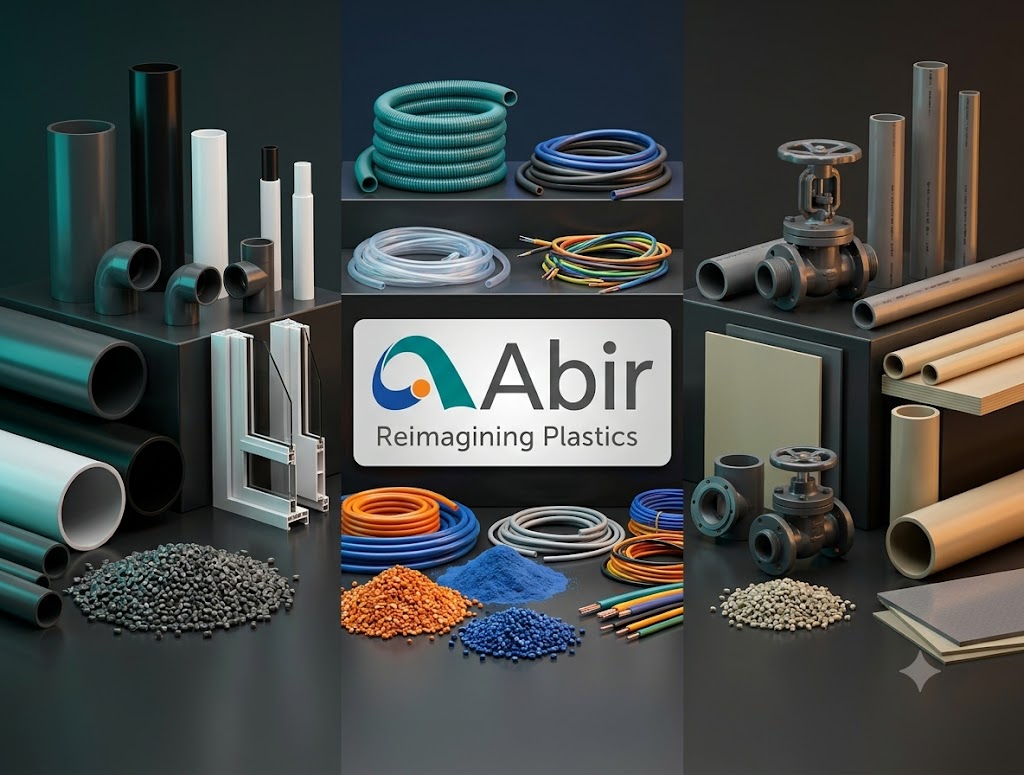
Rigid PVC is commonly selected for pipes, fittings, window profiles and construction products. Flexible PVC is used for cables, hoses, flooring, films and other products requiring flexibility.
Important selection factors include resin characteristics, K-value, plasticiser content, thermal stability, mechanical properties, chemical resistance and additive requirements. The appropriate formulation should meet both processing conditions and finished-product specifications.
PVC Grade Selection Factors Compared
| Application requirement | Recommended selection approach | Key properties to check |
|---|---|---|
| Pipes and fittings | Consider rigid PVC formulations designed for pipe extrusion | Stiffness, impact resistance, pressure performance and dimensional stability |
| Window profiles | Select rigid PVC formulations suitable for profile extrusion | Weathering resistance, stiffness, thermal stability and surface finish |
| Cable insulation | Evaluate flexible PVC compounds designed for electrical applications | Electrical insulation, flexibility, thermal performance and flame requirements |
| Flexible hoses | Consider plasticised PVC formulations suitable for hose manufacturing | Hardness, flexibility, tensile strength and chemical compatibility |
| Flooring and sheets | Select PVC compounds suitable for calendering or sheet production | Wear resistance, flexibility, surface finish and dimensional stability |
| Industrial products | Match the PVC formulation to the intended operating environment | Chemical resistance, mechanical strength and temperature requirements |
Why Do Different PVC Grades Have Different Properties?
PVC grades differ because of resin characteristics, polymerisation properties and compound formulations. These differences influence processing behaviour, flexibility, stiffness, durability and final product performance.
Rigid PVC formulations generally use stabilisers, processing aids and impact modifiers to achieve the required strength and dimensional stability. Flexible PVC formulations contain plasticisers that modify hardness, softness and elongation.
Other additives, including UV stabilisers, lubricants, pigments and flame-retardant components, may be incorporated to meet specific application requirements.
Therefore, selecting PVC requires evaluating the complete compound formulation rather than considering the base resin alone.
Steps to Select the Right PVC Grade
1. Define the application:
Identify the finished product, its function, design and expected service life.
2. Choose rigid or flexible PVC:
Determine whether the product requires stiffness, dimensional stability or flexibility.
3. Identify the processing method:
Consider extrusion, injection moulding, calendering, blow moulding or coating.
4. Review resin characteristics:
Evaluate PVC resin specifications, including K-value where relevant.
5. Evaluate mechanical properties:
Check hardness, tensile strength, elongation and impact resistance.
6. Assess additives and formulation:
Review plasticisers, stabilisers, impact modifiers, lubricants and flame-retardant additives where required.
7. Check operating conditions:
Consider temperature, chemical exposure, moisture, UV radiation and mechanical loading.
8. Verify technical specifications:
Review supplier data sheets, processing recommendations and relevant compliance documents.
9. Validate the selected grade:
Conduct production trials and application-specific testing before final approval.
PVC Grade Selection FAQs
Q1. What is the most important factor when selecting a PVC grade?
The intended application and whether rigid or flexible PVC is required are the starting points. Processing requirements, mechanical properties, thermal stability and operating conditions should also be evaluated.
Q2. What is the difference between rigid PVC and flexible PVC grades?
Rigid PVC formulations are designed to provide stiffness and dimensional stability. Flexible PVC formulations contain plasticisers that make the material softer and more flexible.
Q3. What is the K-value in PVC grade selection?
K-value is an indicator related to PVC resin molecular weight and polymerisation characteristics. It helps manufacturers compare resin grades and assess their potential processing and performance behaviour.
Q4. Does higher plasticiser content make PVC more flexible?
Generally, increasing plasticiser content reduces hardness and increases flexibility. However, the final properties depend on the plasticiser type, formulation and application requirements.
Q5. Can the same PVC grade be used for pipes and cables?
Generally, different formulations are required because rigid pipes and flexible cable insulation have different mechanical, electrical and processing requirements.
Q6. Why is thermal stability important when selecting a PVC grade?
PVC can degrade when exposed to excessive heat or unsuitable processing conditions. Appropriate thermal stabilisation helps maintain material quality during manufacturing and service.
PVC Grade Selection Support
Need Help Selecting the Right PVC Grade?
Compare PVC grades and formulations based on processing requirements, material properties and intended applications. Contact our team to discuss the technical specifications relevant to your product.