Source & recovery history
Ask whether the feedstock is post-industrial or post-consumer, how it is segregated, and what sorting, washing or filtration has taken place. Use source claims only when supported.

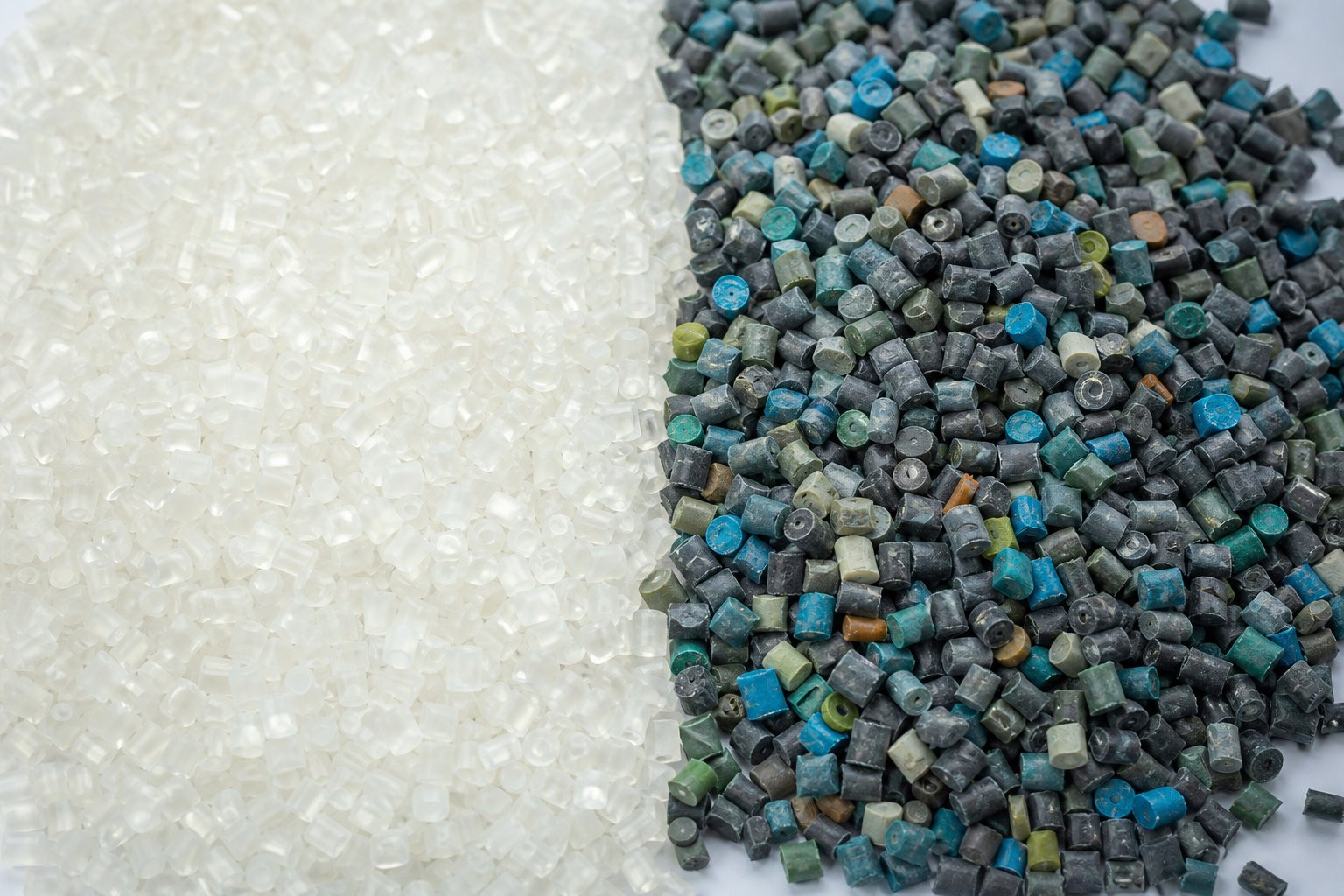
Recovered PVC reprocessed for further use. Source, segregation and lot consistency matter as much as the polymer name.
Keep rigid and flexible sources separate and review legacy additives, stabilisers and contamination. Confirm that the formulation meets the destination market requirements.
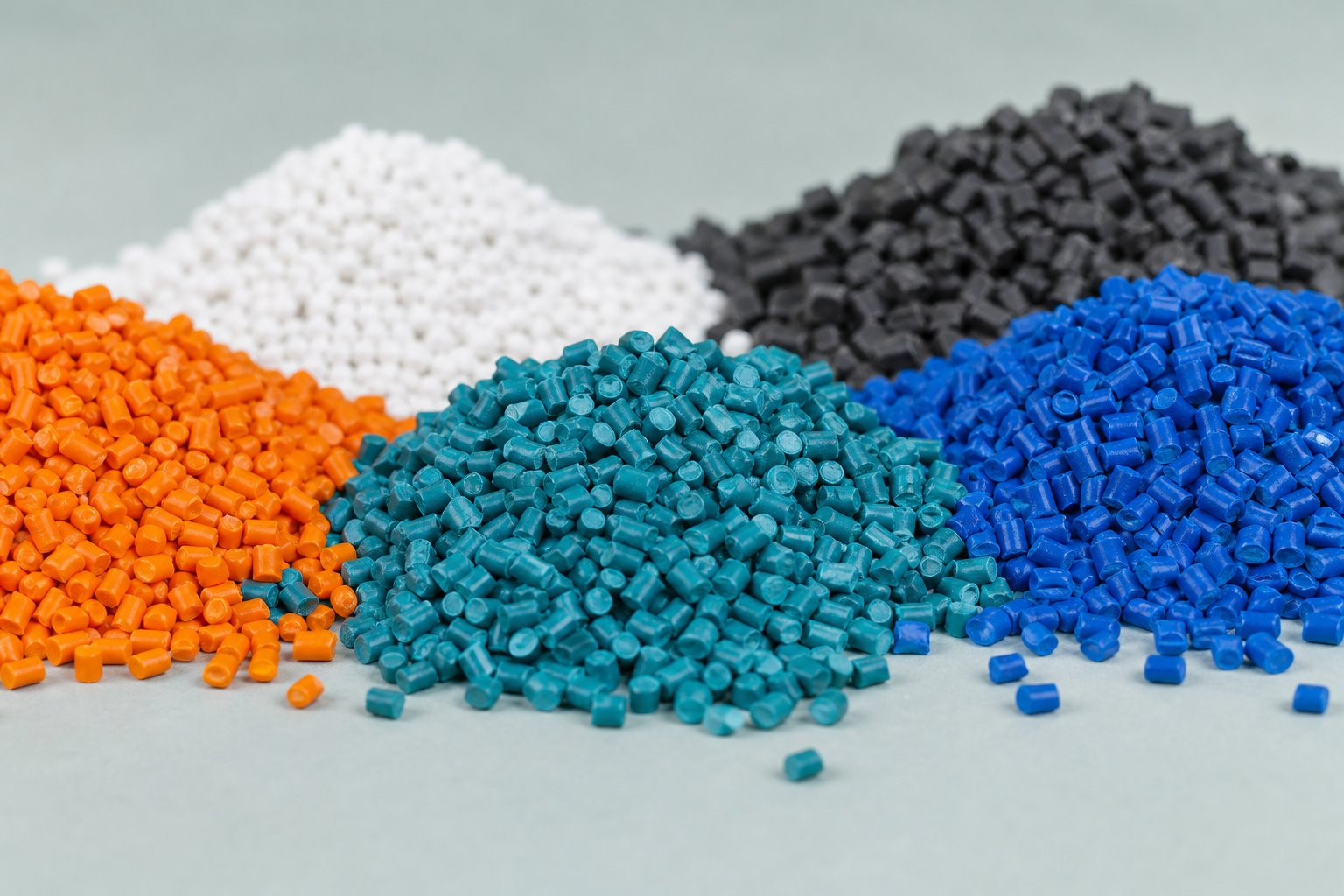
PVC is supplied as resin and formulated compounds; rigid and flexible systems have different processing and end-use requirements.
Recovered PVC reprocessed for further use. Source, segregation and lot consistency matter as much as the polymer name. The supply classification and polymer formulation are different decisions: review both before placing an order.
Use these checks to make the enquiry specific to your process. General material guidance is not guaranteed batch data.
Ask whether the feedstock is post-industrial or post-consumer, how it is segregated, and what sorting, washing or filtration has taken place. Use source claims only when supported.
Keep rigid and flexible sources separate and review legacy additives, stabilisers and contamination. Confirm that the formulation meets the destination market requirements.
Review representative samples, test frequency and allowed variation. Odour, colour, contamination and property drift should be addressed in the acceptance brief, not left until production.
The PVC family is evaluated for profiles, conduits and application-specific flexible products. Those examples do not establish that every recycled lot is suitable for those uses.
Keep rigid and flexible sources separate and review legacy additives, stabilisers and contamination. Confirm that the formulation meets the destination market requirements.
For food-contact, medical, electrical, pressure-rated or other regulated uses, request evidence for the exact grade, source and intended application. Confirm processing conditions and finished-product performance before approval.
Provide the available technical and commercial details so the product team can review your requirement efficiently. Share the application, processing method, grade or specification, required form, quantity, pack size, destination, and required documents.
Not automatically. Compare the actual batch specification, processing behaviour and finished-product performance. Validate the change through an appropriate sample or production trial.
Include resin K-value or compound specification, hardness, plasticiser, filler and stabiliser system. Keep rigid and flexible sources separate and review legacy additives, stabilisers and contamination. Confirm that the formulation meets the destination market requirements. Also include quantity, delivery location and the intended process.
Use the supply navigation above or the related pages below to compare prime, off-grade, recycled and scrap / regrind PVC. Each page describes a different supply route; exact availability and suitability still need confirmation.
Choose a supply type to read its own material guide, selection checks and enquiry details. These links open separate pages.
Fresh PVC resin selected by manufacturer grade, datasheet and documented properties. Prime is not the same as near-virgin or recycled material.
Explore prime / virgin PVCPVC supplied outside its original prime specification or as a declared off-grade lot. Review the actual deviation and batch results before deciding suitability.
Explore off-grade PVCSorted PVC scrap or mechanically reduced regrind for an agreed recovery or conversion process. Feedstock is not automatically equivalent to ready-to-use resin.
Explore scrap / regrind PVC