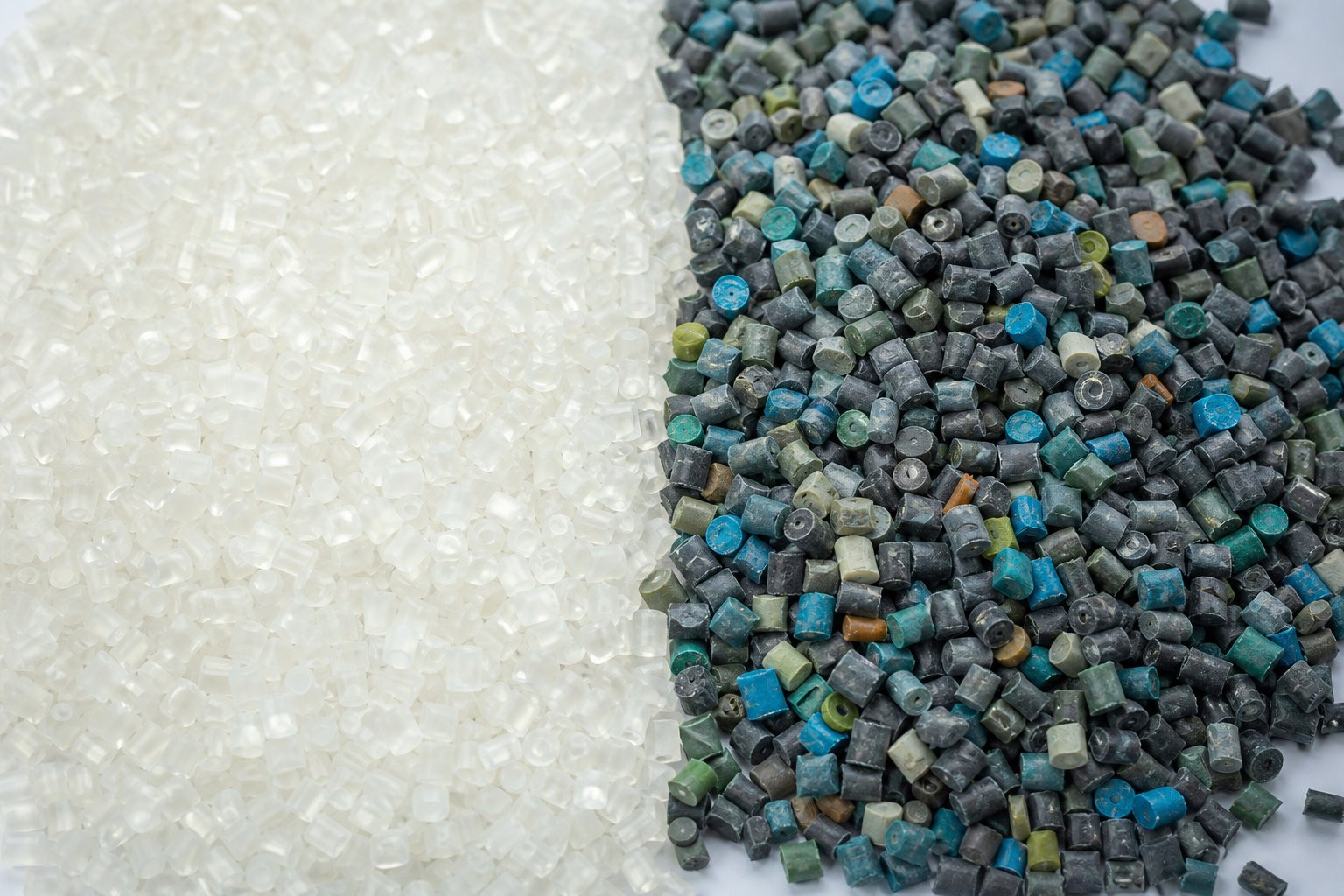
Prime / Virgin LDPE
Fresh LDPE resin selected by manufacturer grade, datasheet and documented properties. Prime is not the same as near-virgin or recycled material.
Explore prime / virgin LDPELDPE (Low-Density Polyethylene) is a flexible thermoplastic valued for its toughness, moisture resistance, and chemical resistance. It is commonly used in films, bags, shrink wrap, coatings, and flexible packaging applications.
Explore prime / virgin, off-grade, recycled and scrap / regrind LDPE on separate supply-type pages. Match source, specification and form to your application, and confirm availability per enquiry.
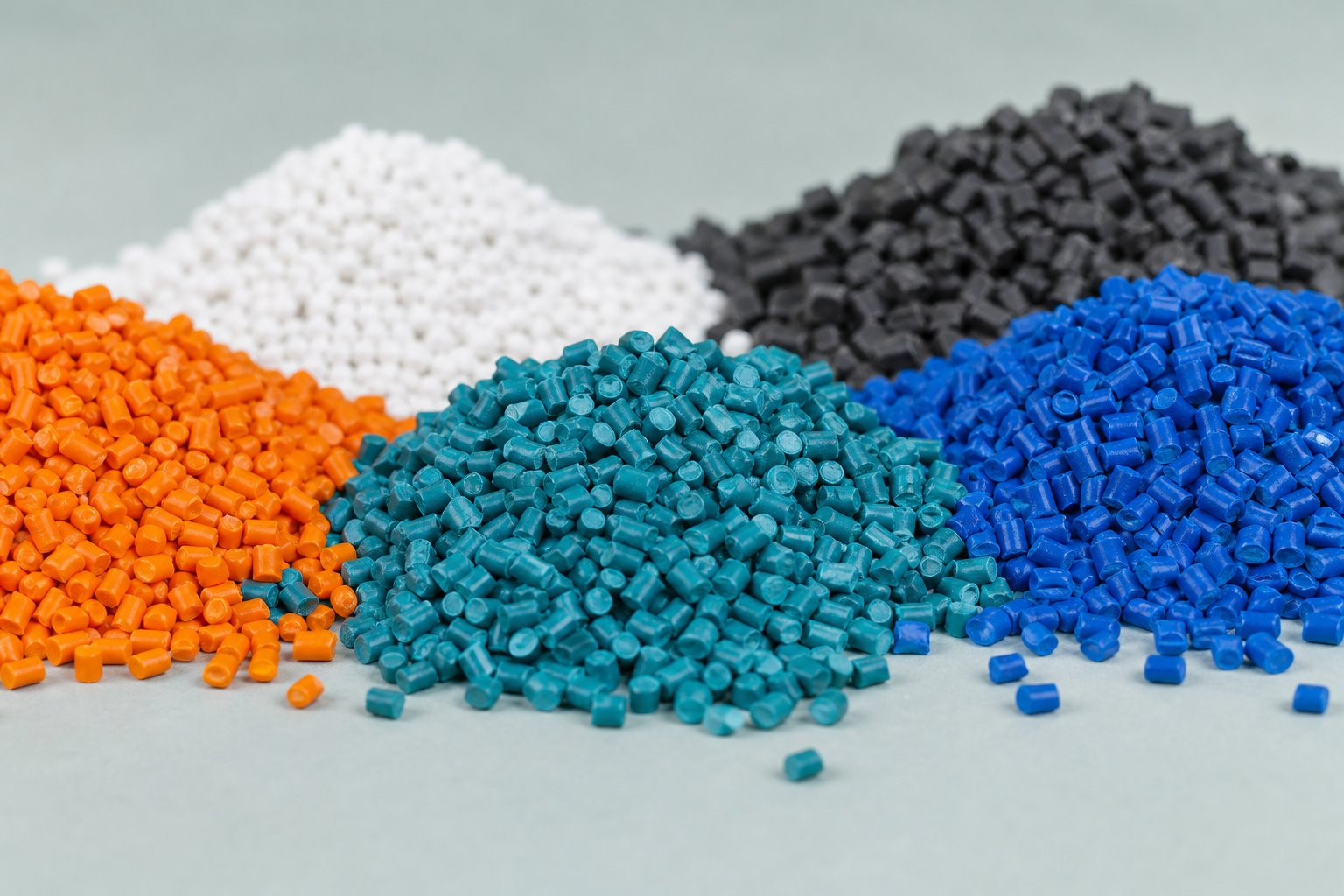
Choose a supply type to read its own material guide, selection checks and enquiry details. These links open separate pages.
Fresh LDPE resin selected by manufacturer grade, datasheet and documented properties. Prime is not the same as near-virgin or recycled material.
Explore prime / virgin LDPELDPE supplied outside its original prime specification or as a declared off-grade lot. Review the actual deviation and batch results before deciding suitability.
Explore off-grade LDPERecovered LDPE reprocessed for further use. Source, segregation and lot consistency matter as much as the polymer name.
Explore recycled LDPESorted LDPE scrap or mechanically reduced regrind for an agreed recovery or conversion process. Feedstock is not automatically equivalent to ready-to-use resin.
Explore scrap / regrind LDPELDPE stands for Low-Density Polyethylene. It is a thermoplastic polymer that belongs to the polyethylene family and is recognized for its flexibility, lightweight nature, and chemical resistance.
Compared with HDPE, LDPE has a more branched molecular structure, which generally contributes to greater softness and flexibility. LDPE is commonly associated with flexible films, packaging products, bags, coatings, and wire insulation applications. Material performance depends on the specific grade, formulation, processing method, and end-use requirements.
What should I consider?Material options: reprocessed or recycled. Publish source, grade, form, documentation, pack size, minimum order quantity and availability only after verification.
Different LDPE grades may be suited for different manufacturing processes and end-product requirements. Grade selection should always be based on technical specifications and processing needs.
Use these prompts to describe the requirement. They are grade category examples, not a confirmed grade or stock list.
Typical uses: Packaging film, agricultural film, protective film, shrink film.
Specify: Film thickness, width, application, and required properties.
Typical uses: Extruded profiles, sheets, coatings.
Specify: Process type, grade requirement, and performance targets.
Typical uses: Paper coating, packaging coating, industrial applications.
Specify: Coating method, adhesion requirements, and end-use environment.
Typical uses: Developed for particular end applications.
Specify: Product type, regulatory requirements, performance expectations, and processing method.
Tell us how the material will be converted and what the finished product needs to do.
Melt flow information supports grade comparison and process selection. Compare values only when test conditions and grade documentation are clear; MFI is one input, not a complete performance measure.
Available forms may include granules, powder, and compounds. Verify the product, source, form, grade or specification, processing method, application, documentation, pack size, minimum order quantity, and availability before publication or purchase.
Suitable for film, extrusion, molding and various manufacturing applications where material specifications are confirmed.
Available for selected applications where particle size and processing requirements are suitable.
Application-specific materials developed to meet particular processing or performance requirements.
Forms shown are potential forms only, not a confirmation of current inventory or availability.
Provide the available technical and commercial details so the product team can review your requirement efficiently. Share the application, processing method, grade or specification, required form, quantity, pack size, destination, and required documents.
LDPE is commonly used in flexible packaging, films, bags, shrink wrap, coatings, and wire insulation. Suitability depends on the grade and application.
Widely used in flexible packaging products where softness and flexibility are required.
Used in carry bags, shopping bags, industrial bags and packaging bags.
Extensively used in packaging films, agricultural films, and protective films.
Suitable for shrink packaging and product protection applications.
Can be used in flexible containers and squeeze bottle applications.
Used for various coating applications depending on grade selection.
Frequently associated with insulation and jacketing applications due to flexibility and insulation characteristics.
LDPE may be specified in several manufacturing sectors. These industry contexts are illustrative and are not a verified customer list or market-footprint claim.
Discuss your applicationMaterial selection should always be based on the intended application and the technical specification of the individual grade. When requesting LDPE material, provide:
Use the conversation to make the product brief clearer. Support topics below describe useful enquiry areas; confirm the services and documentation available for your specific request.
Start an LDPE enquiryIdentify suitable LDPE grades for your application.
Review technical requirements and target properties.
Clarify whether reprocessed or recycled material is required.
Discuss volume requirements and supply requirements.
No testing, engineering approval or certification service is implied. Specific support and documentation are confirmed case by case.
Send the grade or specification, processing method, application, quantity, and destination. Upload a technical datasheet where available.
Answers are general guidance. Verify the individual grade, source and documentation for each requirement.
LDPE stands for Low-Density Polyethylene.
LDPE is commonly associated with films, bags, shrink wrap, flexible packaging, coatings, and wire insulation applications.
LDPE is generally known for flexibility, lightweight construction, toughness, and chemical resistance.
LDPE is generally softer and more flexible, while HDPE is generally stronger and more rigid. Both belong to the polyethylene family but differ in molecular structure. Actual performance depends on the specific grade, formulation, processing conditions, and end use.
Where available, recycled LDPE may be supplied with verified information regarding source, form, color, specification, and intended application.
Depending on availability, LDPE may be supplied as granules, powder, compounds, and application-specific grades. This is not a live stock list: confirm the specific product, source, grade, documentation, pack size, minimum order quantity and current availability.
LDPE is widely associated with film applications including packaging films, agricultural films, and shrink films.
Yes, selected LDPE grades are commonly used in extrusion applications.
LDPE is generally recognized for good chemical resistance characteristics.
Selection should be based on application, processing method, performance requirements, regulatory requirements, and available technical documentation. Attach the current technical datasheet or target specification if available.
Melt Flow Index is a test result used to describe polymer melt flow under specified conditions. Compare values only when test conditions and grade documentation are clear; it is one input to grade and process selection, not a complete performance measure.
PCR refers to post-consumer recycled material and PIR to post-industrial recycled material. Use either classification only when the material source has been verified and documentation supports the description.
No. General characteristics are not guaranteed grade data. Use a current manufacturer datasheet and appropriate technical review for numerical properties and suitability.
Explore practical guidance on LDPE grades, processing methods, applications, recycling, material comparisons, and buyer selection. Use these resources to understand the technical and commercial information needed for a more accurate material enquiry.